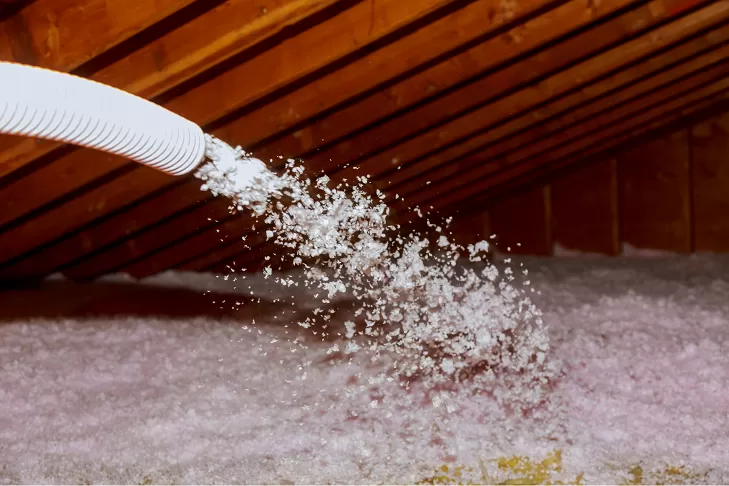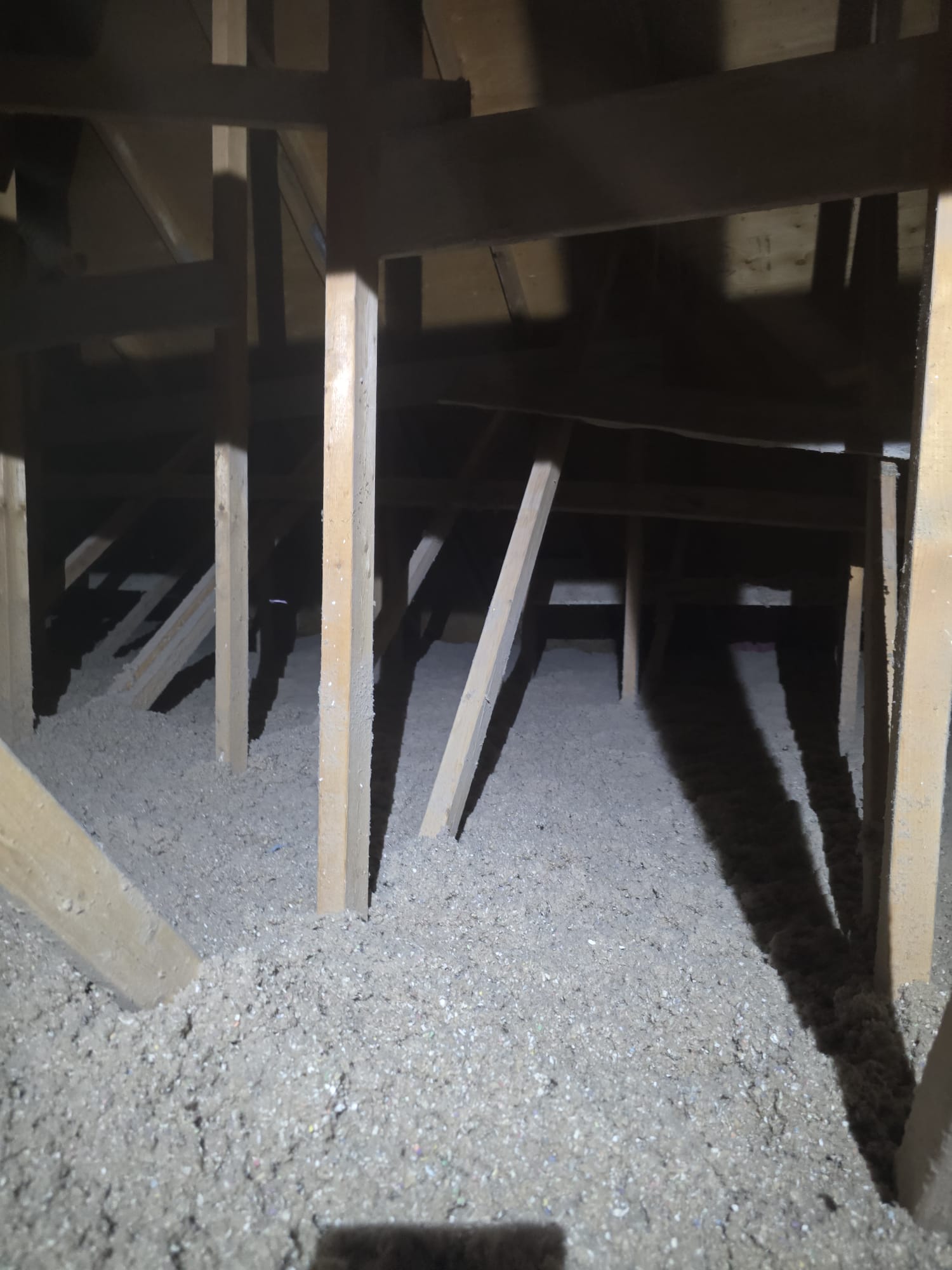
If you haven’t looked at your attic insulation in the last few years, it’s worth a five-minute check. Attic insulation does two jobs at once. It keeps conditioned air where you paid for it. It’s also often the first place mold shows up when your home has a moisture problem. These two issues connect more often than homeowners realize. Damp, discolored, or compressed insulation doesn’t just waste energy — it can turn into mold sitting directly above your ceiling.
Here’s what actually causes mold in attic insulation. You’ll learn how to spot the warning signs. You’ll also see what a proper removal and replacement job looks like for homes in Brampton and across Peel Region.
How Mold Gets Into Attic Insulation in the First Place
Mold needs two things to grow: a food source and moisture. Most building materials — including paper-faced insulation and wood framing — provide the food source. The EPA’s guide to mold and moisture puts it simply: “the key to mold control is moisture control.” Attics are one of the most moisture-prone spaces in a house. Roof leaks, ice damming, rising warm indoor air, and poor ventilation all trap humidity against the roof deck.
Brampton has grown rapidly over the past three decades, so its housing stock spans older 1960s-80s homes near the downtown core and large newer subdivisions further out, with insulation quality varying widely between the two. (Confidence: general regional housing knowledge, not a cited statistic.)
Natural Resources Canada’s Keeping the Heat In guide is blunt about what happens when ventilation and insulation fall short. It lists heavy frost buildup, discolored insulation, and eventually mold or rot as signs of “advanced condensation problems.” In other words, moldy insulation usually isn’t a random event. It’s a symptom of an underlying air-sealing or ventilation problem. Fix that problem — don’t just cover it with new insulation.
Why Moldy Insulation Is a Health Issue, Not Just a Home Repair
It’s tempting to treat attic mold as just a maintenance item. Public health agencies treat it as far more than that. The CDC notes that mold exposure can trigger a stuffy nose, sore throat, coughing, wheezing, burning eyes, or skin rash. People with asthma, mold allergies, or compromised immune systems face a higher risk of serious reactions. The EPA adds that mold produces allergens, irritants, and in some cases substances that can be toxic.
Attic mold doesn’t stay sealed off from the rest of the house. Air moves between the attic and living space through light fixtures, attic hatches, and gaps around plumbing and wiring. That means what’s growing in your insulation can end up in the air you breathe downstairs. (Confidence: high — this is well-documented public health guidance from EPA and CDC, not a marketing claim.)
Signs Your Attic Insulation Needs to Come Out
Not every attic issue requires full removal, but these are the signs worth taking seriously:
- Visible mold or a persistent musty smell when you open the attic hatch.
- Discolored, matted, or compressed insulation — a physical sign of past moisture exposure, even if it looks dry now.
- Water stains on the underside of the roof deck or ceiling drywall below.
- Frequent ice dams in winter. Natural Resources Canada links these to warm attic air melting the snow — a sign your insulation isn’t doing its job.
- Rodent or pest droppings in the insulation, which contaminate it regardless of mold presence.
- Insulation that’s decades old or below current recommended depth for your home’s size and roof pitch.
If you’re only dealing with the last point — old but clean, dry insulation — a top-up may be enough. Moisture, mold, or pest contamination changes that. In those cases, removal is generally the right call. You can’t fully clean or restore contaminated fibrous insulation the way you can a hard surface.
DIY Cleanup or Call a Professional? What the EPA’s Own Guidance Says
The EPA’s mold cleanup guidance gives a specific benchmark. A moldy area under about 10 square feet — roughly a 3-foot by 3-foot patch — is small enough to clean yourself. Just use proper precautions while you do it. Beyond that, or if there’s been significant water damage, the EPA recommends professional remediation.
In an attic, mold rarely stays confined to a small patch. Insulation is continuous, and airborne spores travel easily across it. That’s one reason most attic mold situations end up needing a professional rather than a DIY fix. Insulation itself is porous, so once mold takes hold, cleaning rarely works as well as removing and replacing it. (Confidence: high on the EPA’s 10-square-foot benchmark — that’s a direct quote from their guidance. The “most attics need a pro” point is my own reasonable inference, not an EPA statement.)
What a Proper Attic Insulation Removal Looks Like
A correctly done job isn’t just “pull out the old stuff and blow in new insulation.” It typically involves:
- Inspection first. Identify the moisture source — a roof leak, a bad bath-fan vent, a missing vapor barrier, or weak attic ventilation. Do this before touching the insulation.
- Containment. Seal off the attic access point so mold spores and dust don’t spread into the living space during removal.
- Removal. Extract the contaminated insulation, usually with an industrial vacuum system for loose-fill, or by hand for batts.
- Treat the structure. Wood framing and roof decking that show mold may need antimicrobial treatment or, in severe cases, replacement.
- Fix the root cause. Correct the ventilation, seal air leaks between the living space and attic, and repair any roof leaks. Otherwise, new insulation will eventually face the same moisture problem.
- Reinsulate to the appropriate R-value for the space.
Skipping the “fix the root cause” step is the most common mistake. If you install new insulation over an unresolved moisture problem, it just delays the next mold issue.
Choosing the Right R-Value for a Brampton Attic
Once old insulation is out, the question becomes how much to put back. Natural Resources Canada’s guidance tells homeowners to check their existing insulation depth against current recommended levels for their climate zone. Under-insulated attics lose heat faster, and they’re more prone to the frost and condensation problems we mentioned earlier.
For Ontario homes, local insulation contractors and building associations commonly cite R-60 as the attic insulation target for this climate. I want to flag this: I couldn’t confirm that number against the current Ontario Building Code’s actual text. Treat R-60 as a commonly repeated industry benchmark, not a verified legal minimum. Before you buy materials or sign a contract, ask your contractor to confirm the current code-required R-value for your property. You can also check directly with a licensed building inspector or the Ontario Building Code itself.
Rebates: What’s Actually Available Right Now
Two programs homeowners often ask about are no longer accepting applications. The federal Canada Greener Homes Grant stopped accepting documents after December 31, 2025. Enbridge Gas’s original Home Efficiency Rebate Plus program wound down on the same timeline. If you see a contractor or article referencing either as currently active, that information is outdated.
As of this writing, the active program is the Home Renovation Savings Program. Save on Energy (IESO), Enbridge Gas, and the Ontario government run it jointly, and it lists a rebate for attic insulation upgrades. Enbridge Gas serves most of Ontario, including the Brampton area, so local homeowners are likely eligible on the same terms as the rest of Enbridge’s territory — but I have not individually verified Brampton against Enbridge’s service-area map, so confirm your address qualifies before you budget around it. Rebate amounts and eligibility rules change. Confirm current details on the Save on Energy Home Renovation Savings page before you count on a specific dollar figure.
The Bottom Line
Moldy, wet, compressed, or simply worn-out attic insulation isn’t something to leave for “next year.” It affects indoor air quality, heating and cooling costs, and — when ice dams form — your roof itself. The fix isn’t complicated. Identify the moisture source, then remove and properly dispose of the contaminated insulation. Repair what’s causing the problem, and reinsulate to a level that suits your home.
If you’re in Brampton or Peel Region and want a second opinion on what’s in your attic, get in touch with our team. We’ll inspect it and help you decide between a top-up and a full tear-out.
Sources cited in this article:
EPA — A Brief Guide to Mold, Moisture and Your Home
EPA — Mold Cleanup in Your Home
CDC — About Mold and Health
Natural Resources Canada — Keeping the Heat In, Section 5: Roofs and Attics
Save on Energy — Home Renovation Savings Program